Seoul ADEX 2027 Digital Directory
Plan your trip to Seoul ADEX 2027 using our state of the art Digital Directory
Register in seconds with just your email


Directory Features
To help you at the show
In-depth Exhibitor Profiles
Each exhibitor can add as many products and services as they wish, with in-depth information and specifications. This allows buyers to find what they want easily.
Self Provisioning for Exhibitors
Each exhibitor has full control of their content - to edit their company profile, upload products and enter staff details.
Plan your trip
Use the bookmarking and event planning tool to research the companies you would like to visit and the products you are interested in finding. You will be able to locate all of your saved companies on our floorplan
Advanced Search
Utilize our advanced search function to quickly locate products, people, and companies. Our state-of-the-art technology thoroughly scans all exhibitor information, delivering precise and relevant results
Interactive Floorplan
Navigate the show effortlessly with our directory. Use the floorplan to locate companies you want to visit and to find your way to onsite restaurants, toilets and site entrances and exits.
On-platform Messaging
Reach out to exhibitors and visitors directly on our platform to set up meetings, or request more information.
Some of our latest content
Companies, Products, News, Events
_700.webp)
Shield AI
V-BAT
A Group 3 single-engine, ducted-fan VTOL UAS with 12+ hours of endurance. Operating in Ukraine and other conflict zones today, V-BAT delivers combat-proven, expeditionary surveillance and targeting at a fraction of the cost and logistics of larger Group 4 and 5 drones. It launches and recovers unassisted from ship decks, rooftops, and austere terrain—no runway, catapult, or net required. V-BAT is being adopted by the DoD, U.S. Coast Guard, and international customers amid growing global demand.
Kallman Worldwide, Inc.
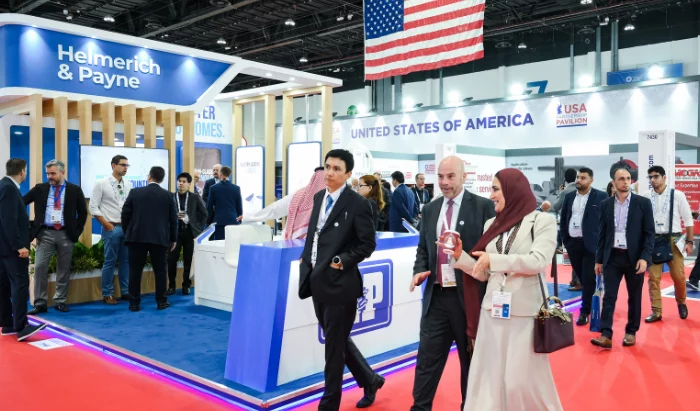
The Partnership Pavilion
At trade shows around the world, Kallman’s flagship service, the Partnership Pavilion, is America’s full-service, business-to-business headquarters; the on-site hub of the U.S. and Canadian export community. The Partnership Pavilion covers Aerospace; Defense; Maritime; Medical; Mining; Oil & Gas; and Food industries. The Pavilion presents the perfect platform for business, maximizing U.S. and Canadian exhibitor exposure and creating a networking forum.
Prime exhibit space & quality designs:
Built on the idea that an organized group of exhibitors is easier to find than stand-alone booths scattered throughout a show, the USA and Canada Partnership Pavilions always attracts a crowd.
Professional Amenities and Staff:
Every USA and Canada Partnership Pavilion is staffed by an experienced event team dedicated to your success. Whether you need a liaison to the organizers, tech support, a contractor, caterer, translator, printer, or help tracking down a shipment... we’re here to help.
Exclusive events and programs:
As an exhibitor you have exclusive access to all Partnership Pavilion events; including our Opening Ceremony and Ribbon-Cutting, off and on-site hospitality receptions, business and market insight briefings, and special presentations.
TECHSAN ENG
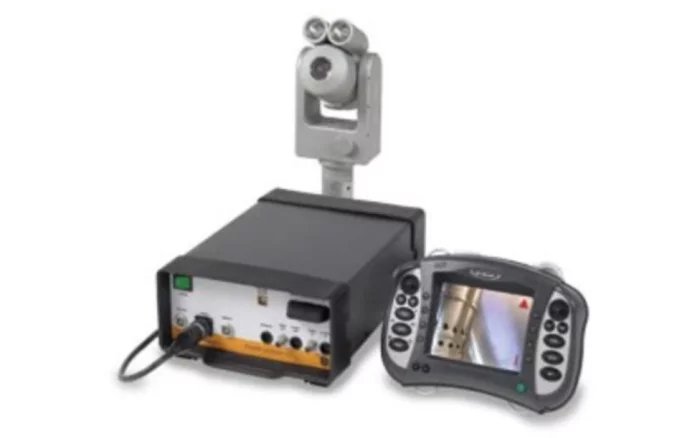
Industrial Borescope PTZ 14
R HUGHES' Ca-Zoom PTZ 140 is a Pan-Tilt Zoom Camera inspection equipment equipped with the Ca-Zoom® 6.2 system.
This equipment is capable of a total of 432x zoom with 36x optical zoom and 12x digital zoom, increasing inspection efficiency.
In addition, two high-performance 35W lights are installed in the light source to enable more smooth inspection.
The inspection technology of the PTZ Camera Ca-Zoom® line of products makes them ideal for inspecting large areas that are difficult for humans to access, such as tanks, vessels, pipelines or nuclear power plants.
CBOL Corporation
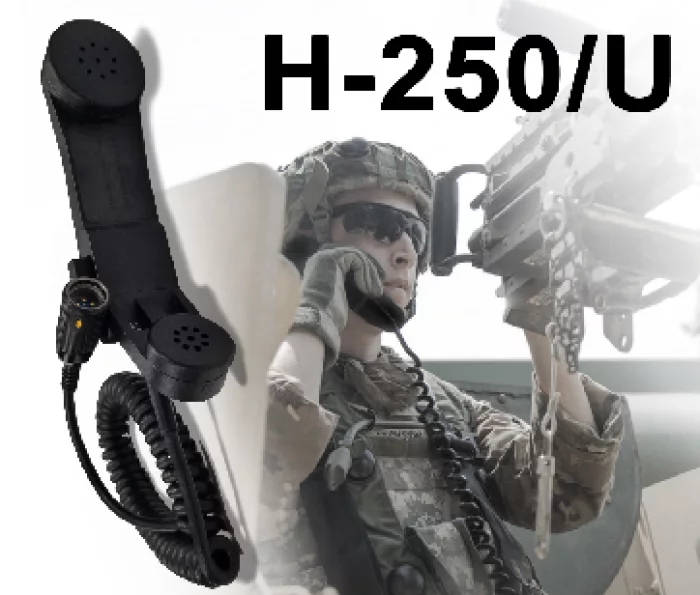
H-250/U Handset
CBOL Corporation is pleased to highlight our role as the producer of the H-250/U handset and our role in the supply chain, as we actively contribute to fulfilling the needs of a respected U.S. military OEM through having passed its rigorous qualification requirements. We take great pride in our ability to meet our valued partners' evolving demands in ensuring national security and abroad.




_700.webp)