
 Digital Directory


Our 155mm Artillery Shell
L15 High Explosive (HE)
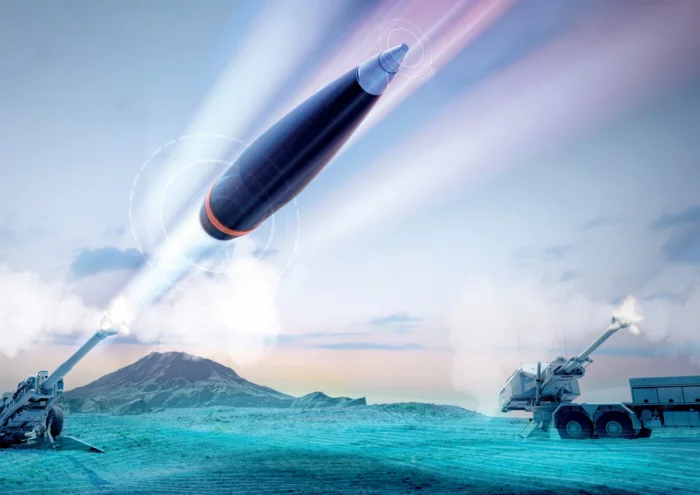
Designed for use with a range of 155mm guns, this shell combines advanced technology with logistic simplicity, giving the user higher performance, in a cost effective manner. It comprises of a high tensile, steel body and is fitted with a user-selected fuze, for greater operational flexibility. The shell body features a thin wall, which is optimised for high fragmentation and blast effect.
XL12E1 High Explosive (HE) Extended Range (ER)
Based on a mature design, with a shell body adapted from the L15 High Explosive (HE) shell. A screw-on base bleed unit can be used to optimise range extension whilst maximising lethality.
L21 High Explosive (HE)
This shell is ballistically matched to the M107, as used by the US military. It is fitted with a removable nose plug, providing the user with greater operational flexibility, through choice of fuze.
L17 Inert
For use in gun proving, gun warming and handling practice, this shell is ballistically matched to the L15 High Explosive (HE) shell. It is fitted with a Plug Representing Fuze (PRF) and the steel body contains inert filling.
Our 155mm Propelling Charges
Our 155mm ammunition is supported by a range of propelling charges, which are designed for use in a wide range of 155mm ammunition systems.
L8 Propelling Charge
This consists of a cloth bag containing charge increments three to seven, with increments four to seven being removable. Ignition is by base igniter pad, contained in charge increment three and a breech-loaded percussion primer. A flash reduction agent is included in increment five and a de-coppering agent is included in increments five, six and seven.
L10 Propelling Charge
This consists of a combustible case, containing a single bundle of propellant and an igniter and disc assembly. A de-coppering agent is included in the charge.
L18 Propelling Charge
Used for training, this charge system consists of five increment charges of unequal size, to provide coverage for all zone firings. A flash reduction agent is included in the propellant composition and a de-coppering agent is included in increment four. The propellant is contained in cloth bags and the complete charge is secured together by cloth tying straps, attached to the base charge.
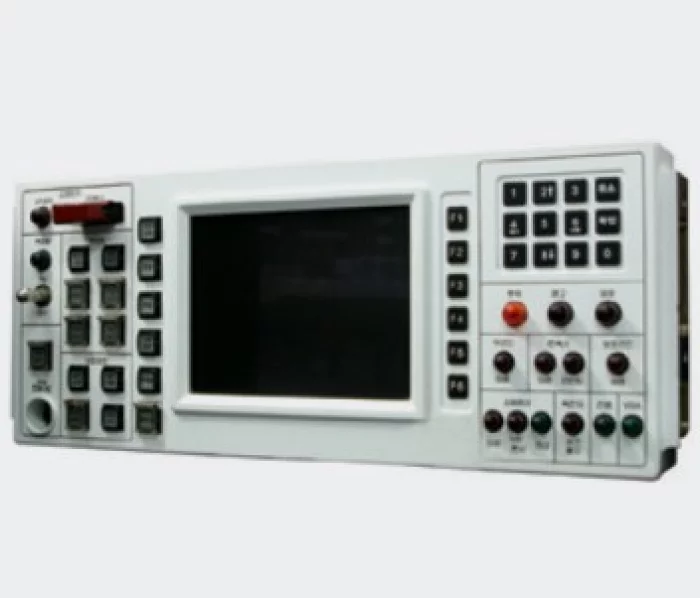
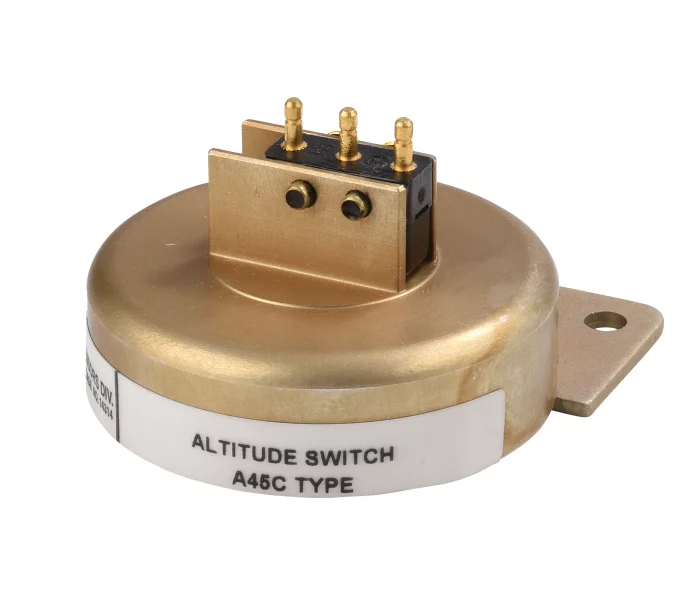
Typical uses include aircraft cabin air pressure monitoring.
For an environmentally sealed alternative, refer to the E-C series. For qualification information, please consult the sales or engineering departments.
Features
Intended for gaseous media
Low profile skeletal design
Ni-Span-C capsule provides superior setpoint stability over temperature
Custom configurations available upon request
 (2)_700.webp)
_lpr_700.webp)
With the lowest acquisition, operational and maintenance cost of any 70-ton capable recovery system, HERCULES answers the need for cost-effective, self-supporting heavy recovery performance.
The HERCULES was the primary 70-ton recovery system during Operation Iraqi Freedom. And, U.S. troops found a few other creative uses for its capabilities when they used it to pull down the Saddam Hussein statue in Baghdad on April 9, 2003. HERCULES uses a hull designed for the recovery mission and thoroughly proven by U.S. Army testing. Stability and performance are unmatched by any alternate tank-based design.
HERCULES offers operational and logistics commonality with the existing M88A1 fleet, simplifying training and parts availability. Key upgrades include improved power-assisted braking, improved steering, improved electrical system and increased engine horsepower.
HERCULES features overlay armor protection, ballistic skirts, a longer 35-ton boom, a 140,000-pound (63,504 kg) constant pull main winch with 280 feet of cable, and an auxiliary three-ton winch to aid main winch cable deployment. The M88A2 HERCULES is built and equipped to be the world's recovery champion.