Seoul ADEX 2027 Digital Directory
Plan your trip to Seoul ADEX 2027 using our state of the art Digital Directory
Register in seconds with just your email


Directory Features
To help you at the show
In-depth Exhibitor Profiles
Each exhibitor can add as many products and services as they wish, with in-depth information and specifications. This allows buyers to find what they want easily.
Self Provisioning for Exhibitors
Each exhibitor has full control of their content - to edit their company profile, upload products and enter staff details.
Plan your trip
Use the bookmarking and event planning tool to research the companies you would like to visit and the products you are interested in finding. You will be able to locate all of your saved companies on our floorplan
Advanced Search
Utilize our advanced search function to quickly locate products, people, and companies. Our state-of-the-art technology thoroughly scans all exhibitor information, delivering precise and relevant results
Interactive Floorplan
Navigate the show effortlessly with our directory. Use the floorplan to locate companies you want to visit and to find your way to onsite restaurants, toilets and site entrances and exits.
On-platform Messaging
Reach out to exhibitors and visitors directly on our platform to set up meetings, or request more information.
Some of our latest content
Companies, Products, News, Events
_700.webp)
HYUNDAI WIA Corp.
ADS (Anti-Drone System)
- Rader
· Detection Range : 1.5~10km, Customizable
· Radar Type : AESA
- LONG RANGE EO/IR
· Identification Range : 3.0km
· Optical Zoom : 66x (EO), 22x (IR)
- JAMMER
· Jamming Distance : 20km (GNSS), 10km @2km (ISM)
- RCWS (REMOTE CONTROLLED WEAPON SYSTEM)
· Weapon : 40mm AGL, 12.7mm MG
· Ammo Capacity : 48 rounds (AGL), 200 rounds (MG)
· Lethal and Nonlethal 40mm Air Burst Munition Fireable
_700.webp)
Woori HQ Inc.
Air Conditioners
an air conditioner mounted inside the tank
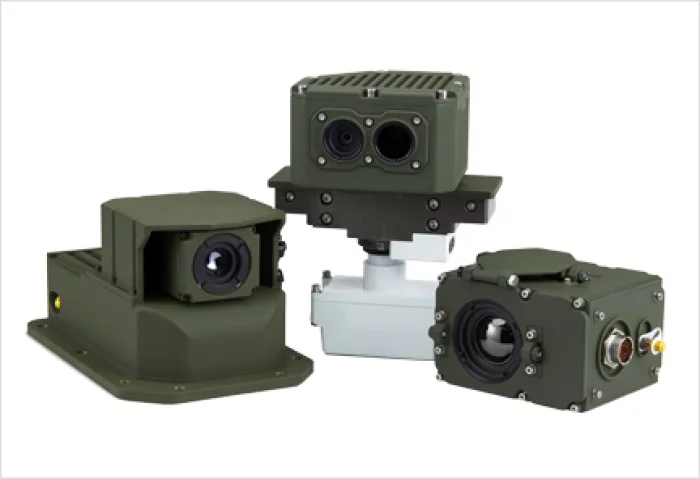
EO System
Vehicle EO/IR System
The TDV is a night driving system that is equipped with an uncooled thermal imaging sensor.
The TDV can be mounted onto various kinds of armored vehicles, IFVs and Battle tanks.
The TDV’s Thermal Imaging Sensor makes it invaluable under all weather and battlefield conditions.
- No ambient light required
- Enables driving in complete darkness
- Enables driving though smoke and dust
- Can be installed to various vehicles
- Uncooled 320x240 Array
- Easy to use
- Large Field of View
- The width of the vehicle can be displayed on the
- The on-screen display can be customized.
- screen, to maximize comfort for the driver.
- Image compensation increases the quality of the image for a clearer view

General Atomics Aeronautical Systems, Inc.
Gambit Series
The future of airpower pairs large numbers of autonomous uncrewed aircraft with the most advanced crewed fighters of today and tomorrow. These AI-enabled uncrewed aircraft systems are designed for low-cost mass production but will pose a significant threat, forcing adversaries to commit valuable resources to combat them – creating gaps in enemy defenses for high-end multi-mission crewed fighters to exploit. Collaborative Combat Aircraft (CCA) will provide magazine depth and advanced battlespace surveillance, using low-observable features to evade detection while securely relaying findings to the front line. They can act on their own or in concert with the rest of the force.
General Atomics Aeronautical Systems, Inc. is advancing this new era of air superiority with a bold new semi-autonomous platform system that is reshaping the way the U.S. and allied forces secure the battlespace: Gambit Series.
Unlike other proposed collaborative platforms, Gambit offers multiple aircraft models, each configured for demanding missions. The series includes variants for intelligence, surveillance & reconnaissance (ISR), air-to-ground engagements, fighter training, stealthy combat reconnaissance, and carrier-based operations. Most importantly, they all have something in common.
General Atomics Aeronautical Systems, Inc. is advancing this new era of air superiority with a bold new semi-autonomous platform system that is reshaping the way the U.S. and allied forces secure the battlespace: Gambit Series.
Unlike other proposed collaborative platforms, Gambit offers multiple aircraft models, each configured for demanding missions. The series includes variants for intelligence, surveillance & reconnaissance (ISR), air-to-ground engagements, fighter training, stealthy combat reconnaissance, and carrier-based operations. Most importantly, they all have something in common.


_700.webp)